

THE BLOG
Ship Happens. We talk about it.
Recent Posts

Zone Skipping Isn't Just for Enterprise
If you've ever shipped a package across the country and quietly winced at the cost, zone skipping might be the strategy you didn't know you were missing. And no, you don't need to be an enterprise shipper to use it.
Most parcel carriers price shipments based on two things: density and distance. That distance is typically measured in zones, a numbering system that reflects how far a package travels from its origin point. The further it goes, the higher the zone number, and the more expensive the shipment. Basically, Zone 2 is practically your neighbour. Zone 8 is across the continent. Every zone in between has your shipping bill increasing.

3PL, 4PL, Fulfilment Partner, Freight Broker — What's the Difference and Which One Do You Actually Need?
A supply chain professional or sales person throws one of these terms at you and you nod along like you know exactly what they mean. Then you go home and google it and you’re still unsure. No judgement, half the industry uses them interchangeably and they're definitely not the same thing.
If you're an SMB shipper trying to figure out how to grow without your logistics completely unravelling, this is the breakdown you need. Let's go through each model, what it actually does, where it overlaps with the others, and, most importantly, which one fits where you are right now and how to know to switch to another.
Female AI Presenters and the Optics of Representation in Logistics Media
FreightWaves has introduced a female AI-generated on-camera presenter into its content lineup. At the same time, visible female human representation on camera at FreightWaves appears limited. Those are observable facts.
And when a media outlet introduces a synthetic female presenter in an environment where real female on-camera representation is sparse, it creates a big optics issue, whether intentional or not.

From Buzzwords to Operational Reality: What Manifest Really Felt Like
I’ve been thinking about how to describe Manifest this year, and the only way I can really put it is this: it felt less AI centric and more operational clarity.
Last year the energy was heavily AI-driven, predictive, generative, self-operating, autonomous. And that made sense. AI was still relatively new in logistics, and there was a real sense of curiosity around what it could become. There was excitement in the room. But many of those conversations were still conceptual. The vision was big, but the operational substance wasn’t quite fully formed yet.
AI was still there this year. Of course it was. And some companies are absolutely building toward workforce reduction. That’s real, and pretending it isn’t would be naive. But the dominant tone in the conversations I was having wasn’t “we’re replacing people.” It was much more grounded. It was about removing friction, increasing access and simplifying workflows.

Consultant or Clarity? What Your Supply Chain Really Needs
Not every supply chain issue requires a logistics consultant. But not every problem can be solved by Googling “why are my freight costs so high?” at 11:47 p.m on a Sunday night.
For small and mid-sized businesses, knowing the difference can save serious money. I’ve seen companies spend tens of thousands on consulting when what they really needed was education and resources. I’ve also seen companies try to “figure it out internally” while quietly bleeding cash for years.
The question isn’t whether consultants are good or bad. The question is: what kind of problem are you actually dealing with?

The Boring Fixes That Actually Reduce E-Commerce Returns
E-commerce returns are unavoidable. Regardless of if you sell on Amazon, Shopify, marketplaces, or your own website, some percentage of orders will come back. Online shopping has removed the ability for customers to touch, test, or try-on products before buying, and nothing can completely fix that.
What can be fixed is how often customers feel disappointed once their order arrives. Most e-commerce returns don’t happen because customers are malicious or trying to game the system. Most of the time, returns happen because the product that arrived didn’t match what the customer expected, simple as that. That gap between expectation and reality is why most returns happen.
Reducing e-commerce returns doesn’t need to involve fighting customers or tightening return policies. It’s about managing expectations before checkout. Below are eight simple, but boring ways to reduce return rates by closing that gap.
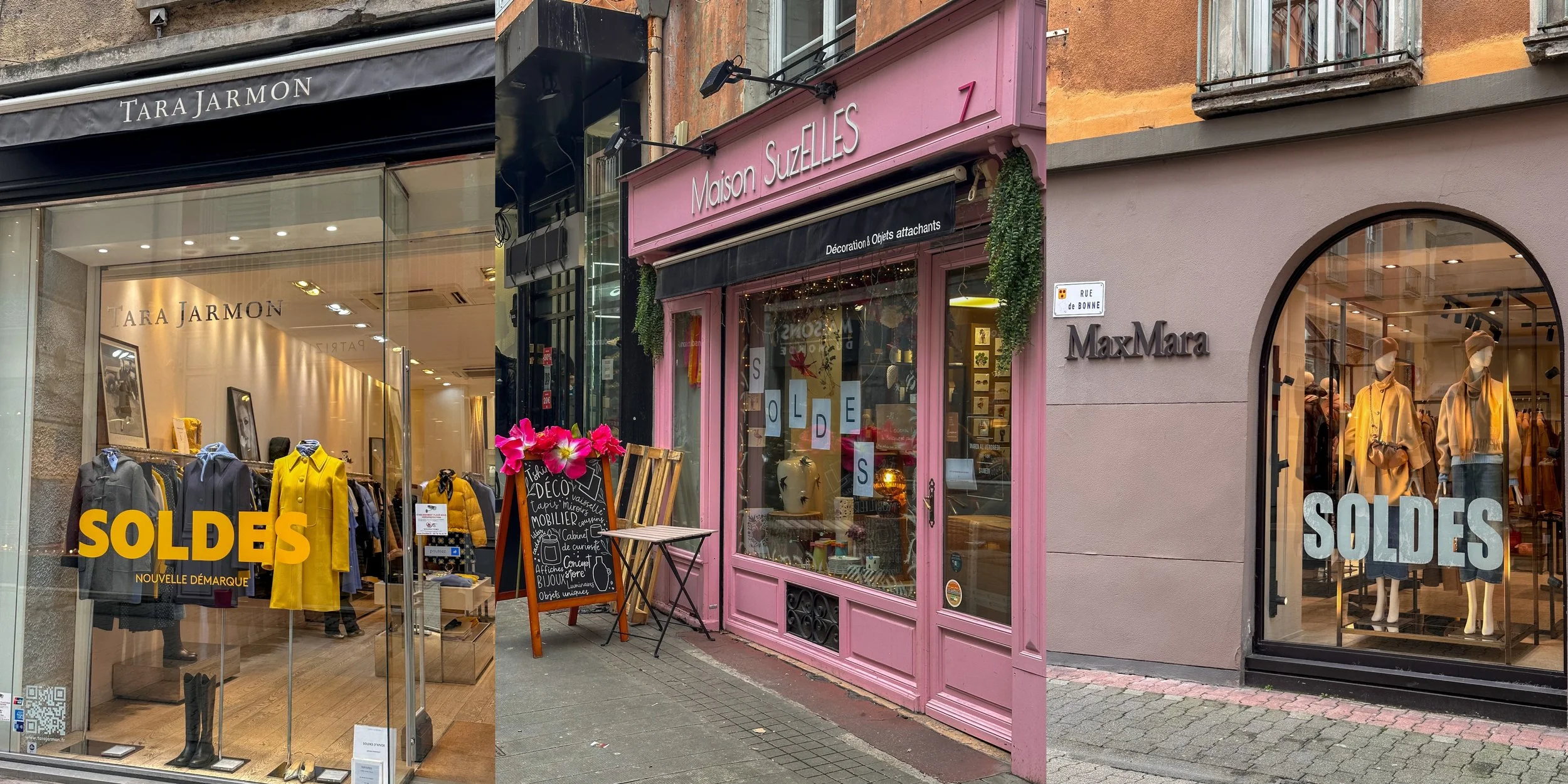
Les Soldes Explained: France’s Regulated Retail Sales
I’ve been quietly gatekeeping this, but if you’re in France in January or July, it’s impossible to miss. Every shop window, from luxury boutiques to high-street chains, is plastered with the same word in bold letters: SOLDES.
To anyone visiting from outside France, it looks like a normal sale season. It’s not.
Les Soldes are a legally regulated national retail event, with fixed dates and strict rules. This is not just a marketing moment. It’s a very specific system.
So… what is Les Soldes?
In France, retailers are only allowed to run official Soldes twice a year:
Winter Soldes (January–February)
Summer Soldes (June–July)
These dates are set nationally. Retailers do not choose them, extend them, or move them around. When the window opens, it opens for everyone. When it closes, it closes for everyone.

Shopping With Intention: Second-Hand Retail and the Circular Economy
As a digital nomad, I’m also very aware of what I buy. I don’t have closets or storage space spread across multiple rooms. Everything I buy has to earn its place. That usually means I’m drawn to pieces that are well-made, versatile, and a little bit interesting, things that let me keep a personal style without defaulting to the same black jeans and plain t-shirts everywhere I go.
So on a rainy afternoon in London, the last time I visited, I walked into a charity shop and found a well-fitted tweed blazer. It fit properly, felt high quality, and worked with the rest of my very limited wardrobe. The find itself was luck, but the conditions that make moments like that possible are very predictable in a retail culture where second-hand shopping is normalized and accessible.
Charity shops and second-hand retail stores aren’t just a trend or a sustainability talking point. They represent a functioning circular supply chain operating at scale, in plain sight.

11 Simple Supply Chain Problems Costing You Money (That Have Nothing to Do With Rates)
When companies talk about “cutting logistics costs,” the conversation almost always goes straight to rates. But for most businesses, the real money leaks are not from rates, they’re buried in timing, processes, and people's decisions that quietly add cost every single day.
Here are 11 fixable problems that cost you money long before a carrier ever sends an invoice.