Les Soldes Explained: France’s Regulated Retail Sales
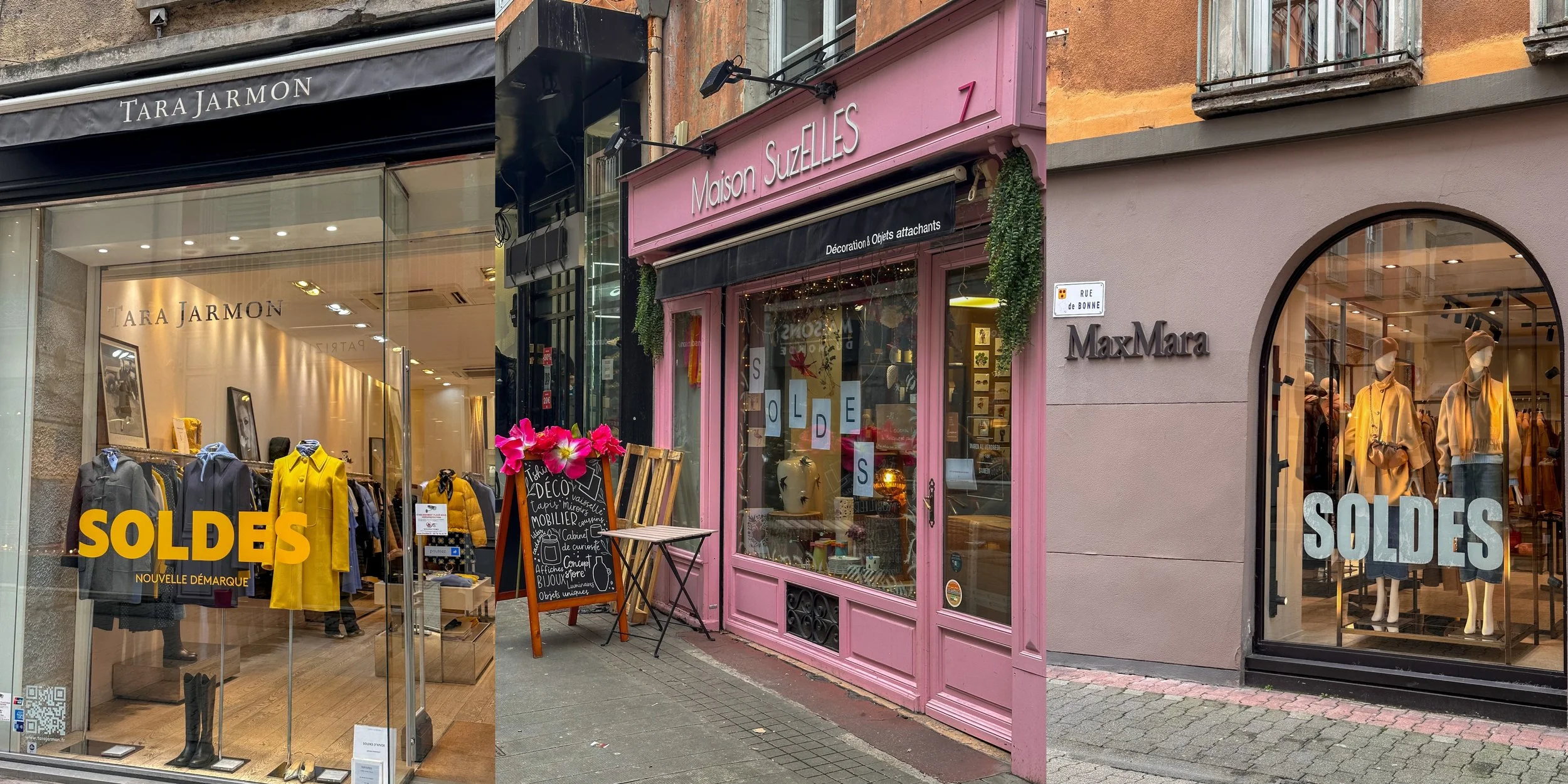
I’ve been quietly gatekeeping this, but if you’re in France in January or July, it’s impossible to miss. Every shop window, from luxury boutiques to high-street chains, is plastered with the same word in bold letters: SOLDES.
To anyone visiting from outside France, it looks like a normal sale season. It’s not.
Les Soldes are a legally regulated national retail event, with fixed dates and strict rules. This is not just a marketing moment. It’s a very specific system.
So… what is Les Soldes?
In France, retailers are only allowed to run official Soldes twice a year:
Winter Soldes (January–February)
Summer Soldes (June–July)
These dates are set nationally. Retailers do not choose them, extend them, or move them around. When the window opens, it opens for everyone. When it closes, it closes for everyone.
During this period, retailers are allowed to discount existing inventory, sell products below cost, and mark down items progressively over several weeks. Outside of these windows, selling at a loss is generally prohibited. That’s what makes Les Soldes different from the constant, vague “sale” culture common in many other markets.
To be clear, Les Soldes is not a clearance sale whenever a retailer feels like it or a chance to bring in special low-quality stock just for discounts. Only items already in stock before the start date can be sold at Les Soldes. No last-minute reorders or topping up shelves mid-sale. If it’s gone, it’s gone.
Which is why French consumers treat these sales differently than consumers treat sales elsewhere in the world and why retailers plan around them months in advance.
Why France does it this way
The idea behind Les Soldes goes back to the rise of modern retail in the 19th century, specifically with the emergence of large department stores. As seasonal fashion cycles became more structured, retailers needed a reliable way to clear unsold goods before new collections arrived. Originally, these markdowns were informal. Stores discounted excess stock when they needed to, with little consistency or oversight. Over time, that created problems. Consumers struggled to tell real discounts from fake ones (inflated pricing with a “discount”), and constant markdowns risked distorting competition, especially between large retailers and smaller shops.
Rather than banning discounting altogether, the French government chose to regulate it. Sale periods were formalized, rules were introduced around pricing and inventory, and specific windows were created during which retailers could sell below cost. The goal was to protect consumers, create transparency around pricing, and still give retailers a defined way to clear unsold inventory.
In short, Les Soldes weren’t designed for marketing. They were designed to bring structure and limits to retail discounting.
Is Les Soldes popular?
Les Soldes are very popular, just not in the way they once were. Retailers continue to rely on them to clear inventory, free up space for new collections, unlock cash tied up in unsold stock, and create predictable times of foot traffic. Consumers, in turn, like the certainty of Les Soldes. They know when genuine discounts happen, rather than trying to decode endless “special offers” that never really end.
At the same time, the impact has softened. Trends like private sales, loyalty discounts, and imported shopping events like Black Friday have changed how people buy. The urgency isn’t quite what it used to be. What hasn’t changed is the structure. The dates are fixed, the rules are clear, and everyone plans around the same window.
When the sale ends, whatever hasn’t sold enters other parts of the retail world. It becomes outlet stock, liquidation goods, donations, or, in some cases, write-offs. In that sense, Les Soldes aren’t just about selling products. They offer a clear read on what customers actually wanted, what was a poor inventory bet, and what may simply have been priced wrong to begin with.
Why this matters beyond shopping
Les Soldes are a good reminder that retail doesn’t exist in a vacuum. This is a case where culture, law, and consumer behaviour intersect to directly shape how goods move, when they move, and what happens when they don’t.
France has chosen predictability over constant promotion. That choice influences how much and when products are produced, when it’s discounted and how businesses can recover cashflow.
Les Soldes isn’t just a sale season. It’s a good example of how national culture and legislation can shape how retail actually works.