Shopping With Intention: Second-Hand Retail and the Circular Economy
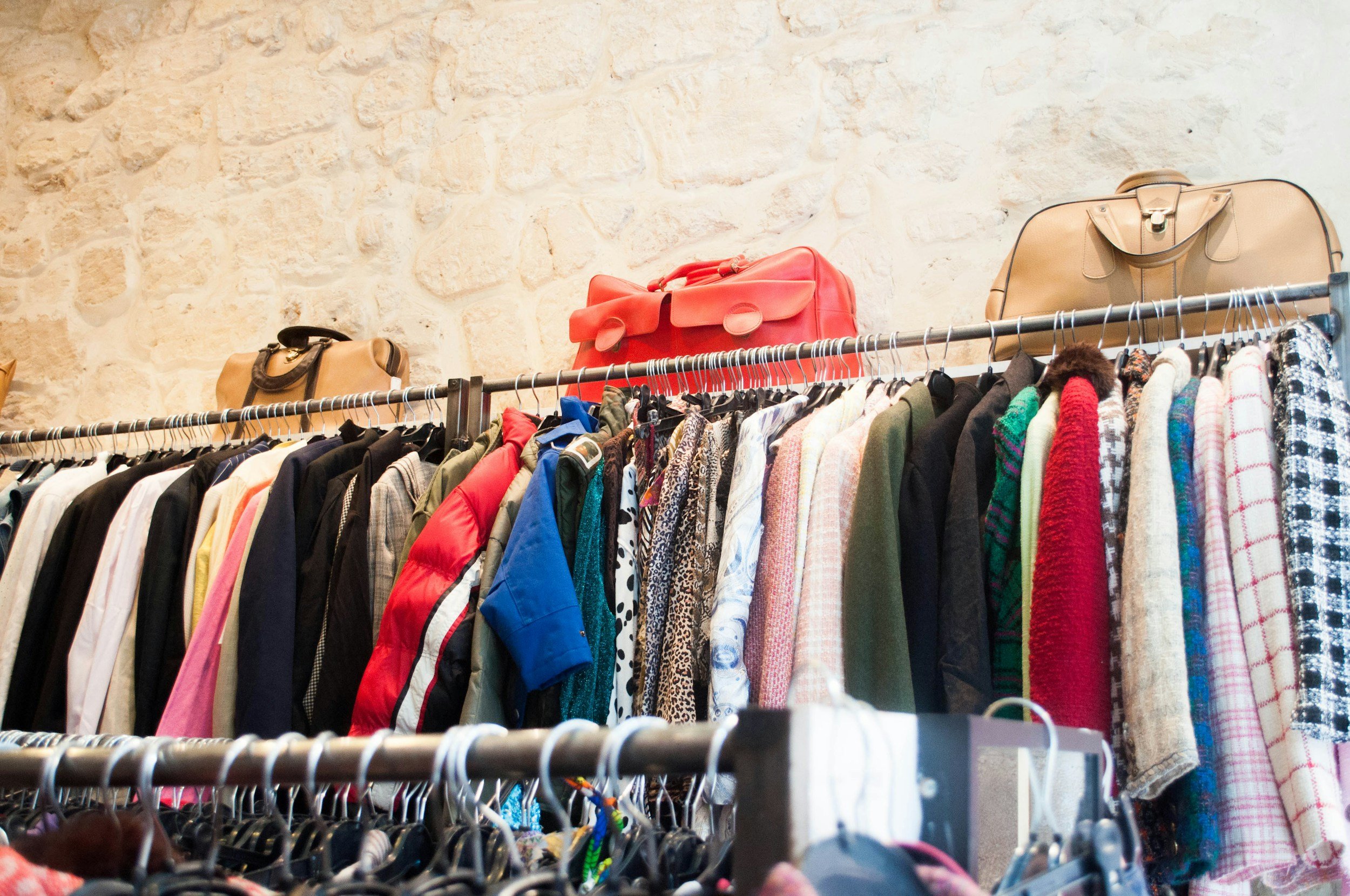
One of my favourite things to do when I’m in London is wander into charity shops. Not in a tourist activity way, just as part of existing in the city. It’s something I look forward to, the same way I look forward to a good cafe or a long walk.
As a digital nomad, I’m also very aware of what I buy. I don’t have closets or storage space spread across multiple rooms. Everything I buy has to earn its place. That usually means I’m drawn to pieces that are well-made, versatile, and a little bit interesting, things that let me keep a personal style without defaulting to the same black jeans and plain t-shirts everywhere I go.
So on a rainy afternoon in London, the last time I visited, I walked into a charity shop and found a well-fitted tweed blazer. It fit properly, felt high quality, and worked with the rest of my very limited wardrobe. The find itself was luck, but the conditions that make moments like that possible are very predictable in a retail culture where second-hand shopping is normalized and accessible.
Charity shops and second-hand retail stores aren’t just a trend or a sustainability talking point. They represent a functioning circular supply chain operating at scale, in plain sight.
The UK Model
In the UK, charity shops are standard retail infrastructure. More than 11,000 operate across the country, embedded into high streets alongside grocery stores, chemists, and fashion chains. This integration matters more than it might seem.
According to Charity Retail Association market research from November 2024, 74% of consumers agree charity shops help reduce local waste, 73% say they provide affordable goods, and 68% view them as encouraging ethical shopping. An Oxfam survey found that roughly one in ten UK residents expect the majority of their clothing purchases over the next year to be second-hand, with nearly two-thirds planning to buy at least some pre-owned items.
It’s also worth noting that online resale platforms are popular in the UK as well. Apps like Vinted and Depop have strong user bases, particularly among younger shoppers. The difference is that in the UK, these platforms tend to complement charity shops rather than replace them. Second-hand shopping was culturally normalized long before resale apps scaled, which means digital platforms extend an existing behaviour instead of needing to reframe it.
What stands out isn’t just participation, but comfort. Shopping second-hand in the UK doesn’t require a moral explanation or a financial justification. It’s simply another way to shop. That cultural acceptance removes friction that still exists in many other markets.
North American Growth (on the Back of Resale Platforms)
While second-hand shopping in the UK has long been embedded in physical retail, growth in Canada and the United States has been accelerated by digital resale platforms. Apps like Poshmark and Vinted have made buying and selling pre-owned goods more accessible, especially for people who don’t live near well-established thrift or charity shops.
These platforms reduce friction and, for some consumers, help bypass the lingering stigma associated with physical second-hand stores in parts of North America. They expand selection beyond local inventory, normalize resale through social and peer-driven interactions, and allow people to participate in second-hand markets without stepping into a store. This matters in markets like Canada, where over three-quarters of adults report purchasing at least one pre-owned item in the past year, and in the United States, where nearly 60% of consumers say they’ve bought second-hand clothing recently.
For many consumers, especially younger ones, resale apps were their entry point into buying used.
What’s notable is that digital platforms haven’t replaced physical second-hand retail. Instead, they’ve acted as the funnel. In Canada and the US, resale apps often serve as the gateway, while thrift stores, consignment shops, and charity retail provide the physical backbone that supports scale, volume, and variety, with the US alone now home to tens of thousands of thrift and resale locations nationwide.
Creative Adaptation: When Second-Hand Becomes a Resource
As second-hand shopping becomes more normalized, people are doing more than just buying or reselling. They’re finding ways to actively reuse materials, extending the life of goods beyond their original form.
Yarn reclamation
One of the more interesting adaptations is sweater-to-yarn thrifting. People intentionally buy second-hand knitwear not to wear it, but to take it apart and reuse the yarn for new knitting or crochet projects. In this case, the garment isn’t the product, it’s the raw material. This approach reframes second-hand clothing as inventory rather than leftovers. It also shows how value can be extracted multiple times from the same item, well beyond its original use.
Repair and redesign
Repair culture has also gained momentum, particularly through social media. Instead of hiding wear and tear, people are openly repairing clothes and sharing the process. “Mended hauls” focus on restoration rather than replacement, treating damage as part of an item’s history rather than a reason to discard it. In some cases, people are creating entirely new items out of a garment. This mindset shift matters. Repair and redesign extends product life, reduces demand for new production, and changes how people assess value. A repaired item isn’t seen as inferior, it’s seen as intentional.
Furniture flipping and restoration
Furniture flipping follows a similar logic. Second-hand furniture is treated as a base layer, something to be cleaned, repaired, painted, or rebuilt. The original object provides structure and material, while the final product reflects personal taste and function.
What ties all of these practices together is that second-hand goods are not treated as finished or fixed. They’re flexible inputs in a broader reuse system.
Circular Supply Chain Mechanics
Traditional retail follows a linear path: produce, distribute, sell, discard. Second-hand retail creates circular flows instead:
Donations and resales redistribute goods locally
Repairs extend product life
Upcycling converts finished goods into materials
Peer-to-peer platforms keep items in circulation
Collectively, these practices reduce demand for new production and divert materials from landfill, without requiring radical behaviour changes from consumers.
The UK shows what happens when this model is normalized rather than positioned as an alternative or a sacrifice. In Canada and the US, second-hand retail is moving in the same direction, supported by growing infrastructure and shifting consumer attitudes. The creative adaptations layered on top suggest people aren’t just buying differently, they’re thinking differently about ownership and use.
Where This Leaves Us
Charity shops and second-hand retail demonstrate that circular supply chains can function as practical, accessible systems. The UK has embedded this approach into everyday retail life. North America is following, with expanding participation and experimentation.
The infrastructure exists and consumer behaviour is shifting. The challenge now isn’t proving that circular systems can work, but scaling them to meaningfully absorb the volume that still flows through linear retail models.
And in the meantime, I’ll keep walking into charity shops on rainy London afternoons. Not because it’s novel, but because it makes sense.