

THE BLOG
Ship Happens. We talk about it.
Recent Posts

Who’s Data is it Anyway?
Let's talk about your data, and whether you truly, fully own it. As technology advances we keep signing on to more and more SaaS products that have access to what we do, and I'm not just talking about work. Social media knows so much about me that it can tell when I need to get my hair done, and right on cue the inspo pics start showing up in my Pinterest feed. That one's a fair trade at least, we hand the platform our data and in exchange we get entertainment, information, and connection to other people. But the tools you run your business on are a different conversation, because when you sign on with a logistics SaaS company, what is actually happening to your data? Let's talk about the tech that carriers, brokers, and shippers are using every day, and what's happening to the abundance of data all of it is producing.
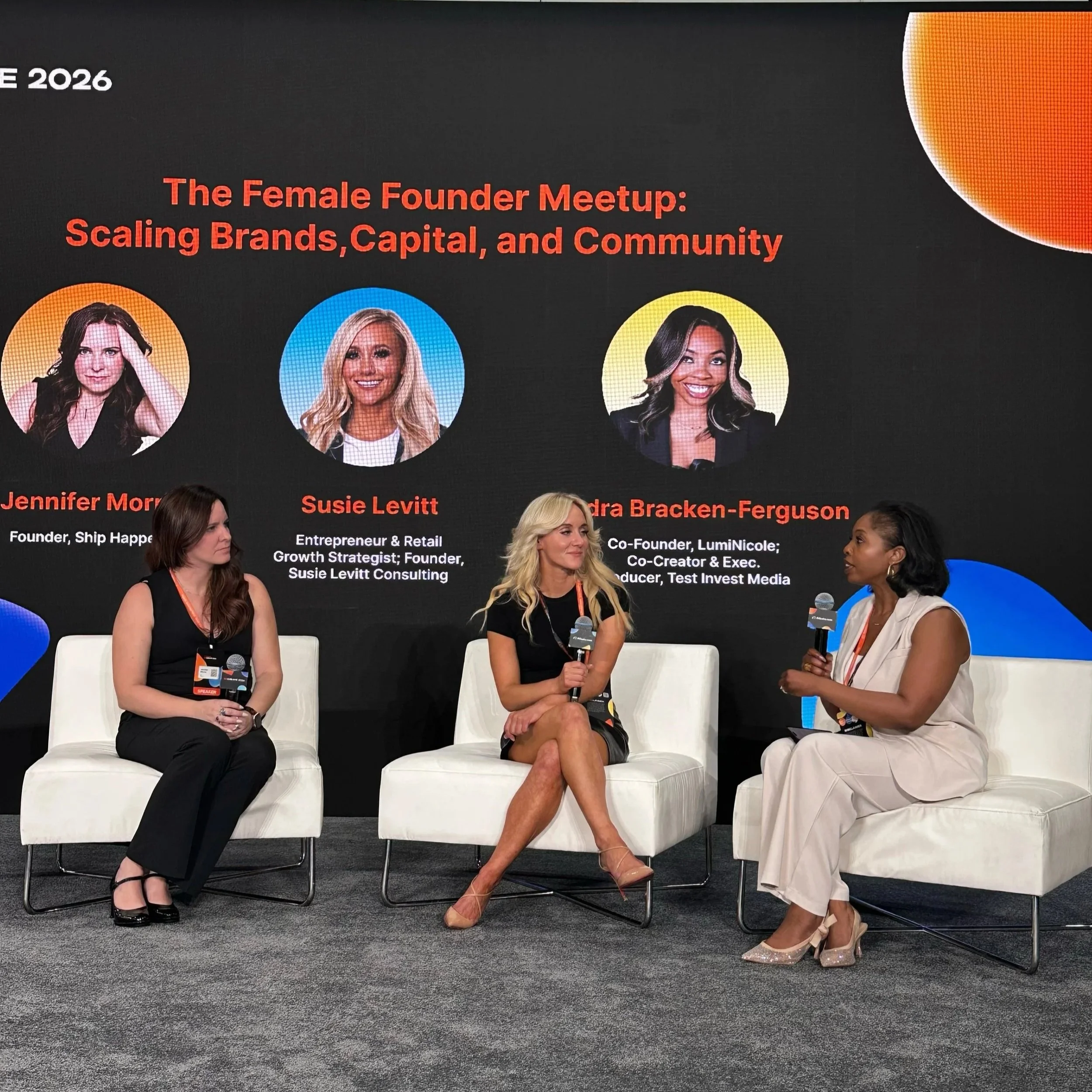
Hot Topics from CoCreate by Alibaba.com
Last week I had the privilege of attending my second CoCreate by Alibaba.com, and this time I was invited to be on a panel called "The Female Founder Meetup: Scaling Brands, Capital, and Community." Thank you to everyone who came out, because I might be biased, but we had a sharp, engaged audience that made the whole thing better than I ever thought it could be.
During my two days of hallway chats, coffee meet-ups, and after-panel discussions, I noticed the same topics kept coming up. So here are the eleven hottest topics.

The Idea That Won’t Go Away
Some of the best people I know in the industry just took the plunge into being founders, and I could not be happier about it.
Four of them, people I have watched operate for a while now and respect enormously, left comfortable, familiar setups to do it together. From the outside that may look reckless. From the inside it is the most obvious thing in the world, and I know that because I have been on the inside of it myself. Ship Happens started the same way, as an idea I could not talk myself out of no matter how sensible I tried to be.

The Stuff Holding My Digital Nomad Life Together
I run a freight brokerage and Ship Happens, and for those that have been around for a while, you know that I do it all as a digital nomad. The Instagram version of digital nomad life skips the part where you're reconciling calendars across three timezones and making sure a client call doesn't land at 3am your time, so the systems are the only reason I am able to keep everything on track and running smoothly (most of the time). Here's the actual stack and these are not the aspirational ones, these tools that survived this unconventional lifestyle.

How to Survive a TMS Demo (Without Buying Something You Don't Need)
If you've been in logistics for longer than about five minutes, you already know the drill. Some rep from a TMS company you've never heard of has found your email, your LinkedIn, and possibly your cell, and they are very excited to book you a fifteen-minute demo that will somehow take an hour and change your life.
Before you cave just to make the follow-ups stop, let's talk about what a TMS actually is, whether you need one, and how to figure out in one call whether the person pitching you is selling something real or just something expensive.
A TMS, transportation management system, is software that pulls the moving parts of your freight into one place instead of spreading them across seventeen browser tabs, three inboxes, and a spreadsheet you're holding together with hope and colour-coding. At its simplest, it helps you rate, book, track, and settle shipments in one spot. The better ones layer on reporting so you can actually see what you're spending and where.

Giant Cargo, Small Gestures: What Breakbulk Taught Me About Empathy
This was my second year at Breakbulk Europe, and that changes what you take away from the experience. Year one in Rotterdam I was a trucking and brokerage person, with 23 years of experience in only North America, who had never touched project cargo (and I still haven't). I will be honest, I spent most of that first experience in awe of the sheer scale of literally everything. Breakbulk is genuinely cool. The cargo is enormous, the vessels are diverse, and the logistics behind moving something that can't go on a truck or fit in a box are the kind of challenge that makes your brain itch in the best way. When it's all new, the spectacle is most of what you take away, and there's nothing wrong with that.

Marketing and Supply Chain Collaboration: Why These Teams Need to Talk
Marketing and supply chain teams need to work together because one side makes the promise and the other side has to keep it. When they share data on inventory, demand, and shipping in real time, you get fewer stockouts, fewer broken delivery dates, and a customer experience that holds together when something goes sideways. When they don't, the customer is the first one to notice.
In most companies, though, these two teams operate like they've never actually met. Marketing runs a promotion on an item the warehouse ran out of last week, and nobody connects the dots until the complaints start rolling in. Breaking down that wall is the difference between a business that runs smoothly and one that spends its days cleaning up messes it created itself. Here's where the collaboration earns its keep.

Procedure Exhaustion Is Real (And It's Probably Your Fault)
There's a scene in Hitchhiker's Guide to the Galaxy where our heroes land on a planet run by the Vogons, a species so obsessed with bureaucracy that nothing gets done without the right form, stamped in triplicate, submitted to the right department, possibly recited as poetry. It's supposed to be a joke, but every time I rewatch it, I think this is just a Tuesday working in supply chain.
We've all worked with a company like this. Maybe you're working at one right now. Maybe, and I say this with kindness, you're running one.
Here's the uncomfortable truth: most bloated workflows weren't designed. They were accumulated. No one is sitting down and building a 14-step purchase order approval process on purpose. Out of control SOPs (Standard Operating Procedure) grow one CYA (cover your ass) step at a time. Someone got burned on a shipment in 2018, so we added a checkbox. Someone else got yelled at by a customer in 2021, so we added an approval. A rogue invoice slipped through in 2023, so now finance signs off too. Five years later, booking a shipment takes longer than driving the truck to the delivery.
This is procedure exhaustion, and it's quietly killing your team's ability to actually do their jobs.

Being Coachable Almost Broke Me
I spent part of my early career at C.H. Robinson, and I had a mentor there. On paper, it looked like exactly what a young woman in logistics should want, someone senior, experienced, and willing to invest time in me.
The problem? They coached everything that made me special right out of me.
Not cruelly, probably not even on purpose. But it happened slowly. I was told to dampen my empathy, to harden up, to move and speak and lead more like the people already at the top, who were mostly men. And because I was young and I didn't really know who I was yet, I took the feedback. I was being coachable. I was doing the right thing.
Except I wasn't. I was just compliant.

How to Network When You Live Out of a Suitcase
People ask me all the time how I manage to network while living out of a suitcase, and honestly, I get why they’re curious. It sounds chaotic from the outside, new cities every month or so, different coworking spaces, shifting time zones, different languages, but for me, networking hasn’t become harder. If anything, this lifestyle has made it even more natural.
Anyone who knows me knows I’m a people person. I’ve always been able to walk into a room and walk out with five new conversations to follow up on later. That didn’t change just because I packed my life into a suitcase and hit the road. What changed is the radius of who I meet. My “local” meeting radius now spans countries.

Automation vs AI: How Logistics Keeps Mixing Them Up (and Why It Matters)
This entire blog started because of my inbox. Specifically: PR emails.
If you work in or around logistics media, you know exactly the ones I mean. The subject line “AI Powered”. The whole email is full of AI this and AI that. And yet somehow, after reading the email three or four times, I still can’t tell what the product actually does.
Is it AI?
Is it automation?
Is it a well-organized workflow with a buzzword glued on top?
Because honestly, how can every new tech and platform be AI?
The more pitches I saw, the more obvious the real issue became: as an industry, we’ve blurred the line between what’s simply a fast, reliable automated process and what is actually intelligent technology capable of learning, adapting, or predicting. And that distinction matters, not just for accuracy, but for budgets, expectations, and whether a team ends up with the right tool for the right job. So let’s talk about it properly, without the jargon-y nonsense.

The Trap of Being the ‘I’ll Handle It Myself’ Person
There’s a specific kind of person who ends up in logistics: the “don’t worry, I’ll handle it” type.
Every industry has them, but logistics seems to attract them in bulk. Maybe it’s the constant problem-solving, maybe it’s the adrenaline of fixing things minutes before they break, or maybe it’s just the culture we all grew up in, where being busy meant you were important. And it shows, logistics workers actually rank #1 for burnout risk of any industry, with 20% over-utilized, 15% at risk, and the longest average workday at 9 hours and 10 minutes.
But somewhere along the way, “handling it” quietly turns into “carrying the entire company on your back.” And most people don’t realize the cost of that until they’re already paying it.
The funny thing is, doing everything yourself feels efficient. It feels responsible. It feels faster at the moment — just answer the email, just update the file, just follow up on the truck, just redo the spreadsheet because the formatting is a disaster and you’re the only one who knows how it should look.
But the truth is this: every time you jump in to do it yourself, you reinforce a system where you are the system. And that’s where the real trouble starts.

Your Brand Is Only as Strong as Your Operations
There’s been an explosion of content in the logistics and supply chain world. LinkedIn is full of polished videos, witty hot takes, and carefully curated brand stories. People, and companies, are learning that building a voice, sharing values, and connecting through storytelling can drive engagement, loyalty, and even sales.
That’s a good thing. But let’s not get carried away.
Because in logistics, your story is only as strong as your execution and service. It doesn’t matter how clever your content is if the trucks don’t show up, the freight goes missing, or no one answers the phone or emails.

Stop Selling Like It’s 1999: These Tactics Are Killing Your Pipeline
Sales used to be about being the loudest voice in the room. Now? It’s about being the most useful.
But here’s the problem, there is a lot of sales advice floating around, especially in logistics, that is completely outdated. To be honest, some of it never even worked to begin with. And worse, it’s still being taught like gospel.
If you’ve ever been told to "always be closing" or "don’t take no for an answer,” this one’s for you. Here are six sales tactics that need to die already, and what to do instead if you actually want to build trust, book meetings, and close deals (without being annoying as hell).

The Real Cost of Doing It All: A Hard Look at Cradle-to-Grave in Logistics
The cradle-to-grave model has been a staple business model in logistics brokerage for years. And with the rise of the agent model across North America, it’s seeing a bit of a glow-up.
Everywhere you turn, there’s another post selling the dream: Be your own boss. Work from anywhere. Build your own book. Keep more of your commission.
Sounds great, right? And to be fair, it can be, it’s how I started my entrepreneur journey. Cradle-to-grave can offer freedom, autonomy, and a chance to build something of your own. But let’s not romanticize it. Because when you’re the one selling the freight, booking the truck, tracking the shipment, handling the fallout, chasing paperwork, and invoicing the customer… that’s not freedom. That’s a one-person logistics department. And it burns people out.

The Art of Following Up Without Being Annoying
Let’s be honest: following up can feel awkward. You don’t want to be a pest, but you also don’t want to let that lead, quote, or opportunity quietly fade into the void.
Whether you’re in sales, customer service, or running your own small business, the follow-up dance is one you have to learn. The trick? Doing it with confidence, and not avoiding being a stage 5 clinger.
Here’s how to follow up like a pro, without feeling like icky about it.

Adapt to Connect: The Logistics Skill You Didn’t Know You Needed
If you’ve worked in logistics for longer than five minutes, you know this industry is all about relationships, and relationships are all about trust. Building that trust doesn’t always mean being the loudest, smartest, or most experienced person in the room. Sometimes, it means reading the room and meeting people where they are.
That doesn’t mean being fake. It means being flexible.
Adapting your communication style, your behavior, and yes, even your attire, is one of the most underrated skills in logistics. Whether you’re pitching a new client, troubleshooting a warehouse delay, or talking drivers through a reroute, success often comes down to your ability to connect. And connections start with how you show up.

9 Soft Skills for a Standout Career in Supply Chain
Let’s be honest, most logistics and supply chain knowledge can be taught. Understanding different transportation modes, hours of service regulations, pricing structures, and operational processes are all things you can learn through training, documentation, and shadowing others on the job. Good companies have procedures in place, and most of the day-to-day work can be handled by almost anyone willing to learn.

Not Everything Needs a Meeting: You Have Options
Raise your hand if you’ve ever sat through a meeting and thought, “this could have been an email.” Now raise your other hand if you’ve been in an email thread so long that you lost the will to live. We’ve all been there. The problem isn’t just too many meetings, it’s ineffective and pointless meetings about the wrong things.

Why Smart Supply Chain Professionals Focus on Agility, Not Trends
Every year, industry experts churn out predictions about where logistics and supply chains are headed. In 2025, AI will revolutionize the industry! The trucking market will stabilize! More visibility and transparency! Collaboration! Resilient supply chains!
Sound familiar? That’s because these so-called trends are often just recycled buzzwords—opinions dressed up as insights. Just like in fashion, trends come and go. Instead of chasing every flashy new idea, why not stick to classic, proven strategies while selectively investing in trends that show real staying power?