Ghost Ships, Real Consequences
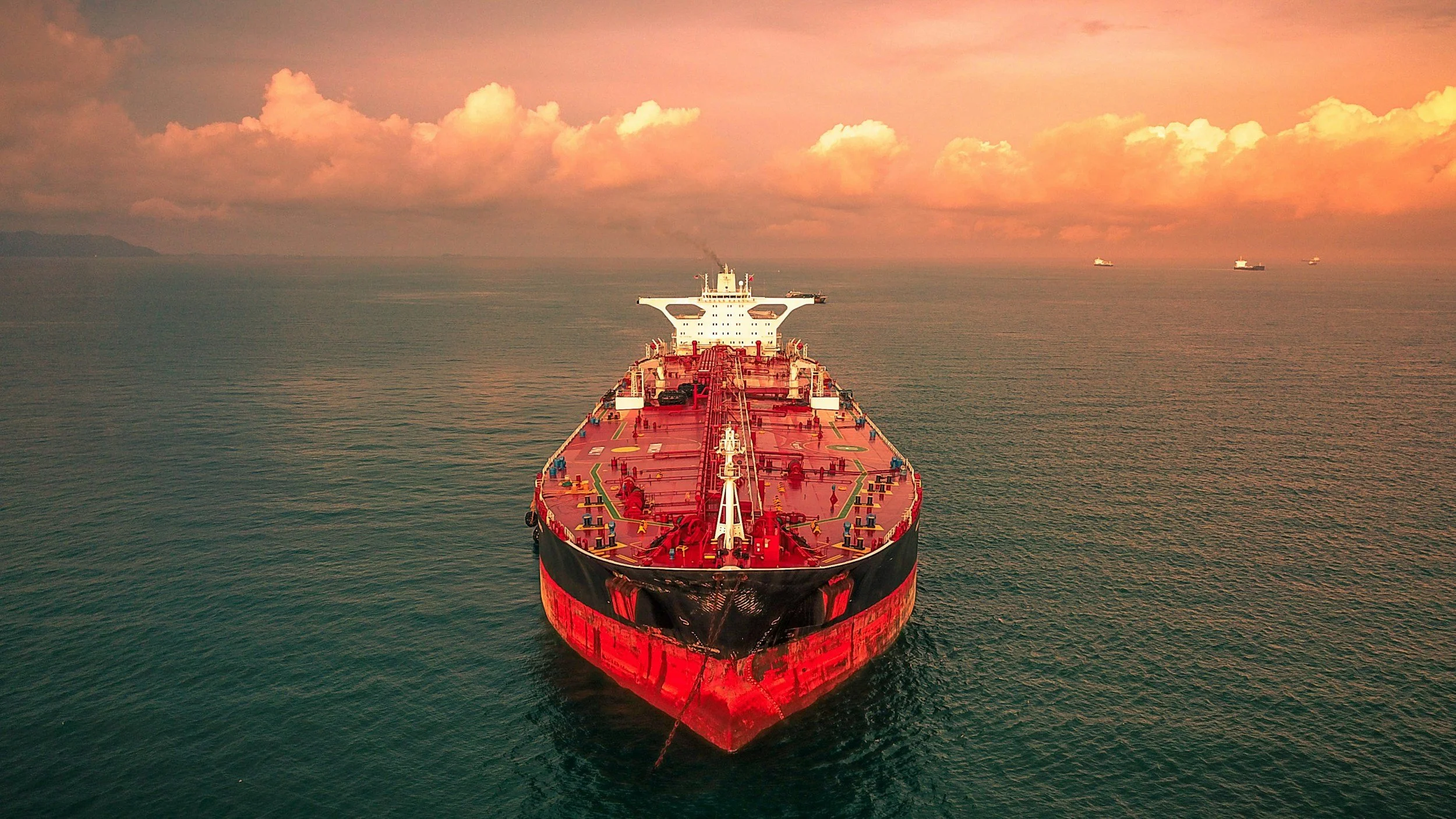
There's a whole shadow world operating underneath legitimate global shipping, and it's bigger than most people realize.
The dark fleet (also called the shadow fleet) is a loose network of oil tankers that move sanctioned crude around the world, specifically designed to get around Western trade restrictions. It's not a coordinated cartel with a headquarters somewhere. It's more like a swarm, hundreds of vessels operating under a shared logic: move oil that isn't supposed to move, and don't get caught. Or the IMO definition is vessels engaging in illegal operations to circumvent sanctions, evade safety/environmental regulations, or bypass insurance costs, typically using deceptive tactics
How did we get here?
The dark fleet isn't new, but it exploded after Russia invaded Ukraine in February 2022. When the G7 slapped a $60-per-barrel price cap on Russian oil and Western insurers and shippers started walking away, Russia needed another way to keep the money flowing. And of course, they found one.
By late 2022, there were already over 600 vessels in the Russian shadow fleet alone. By Q3 2025, analysts were tracking more than 1,900 dark fleet vessels globally, estimates range from roughly 1,500 to nearly 2,000. For context, that's roughly 10% of all large oil tankers on the planet operating outside the formal rules.
Russia isn't the only player. Iran and Venezuela have been running their own versions of this for years, Iran's seaborne crude exports surged from roughly 400,000 barrels per day in 2020 to around 1.6 million barrels per day by 2024–2025. The dark fleet is the reason that number is possible.
How it actually works
These ships don't exactly hide, they just make it very hard to prove anything. A few of the standard plays:
AIS spoofing. Every commercial vessel is supposed to broadcast its location via Automatic Identification System. Dark fleet tankers routinely fake their position. One tanker, the Skipper, had its AIS placing it off the coast of Guyana while it was actually loading sanctioned Venezuelan oil somewhere else entirely.
Ship-to-ship transfers. Two vessels meet at sea, usually in loosely regulated waters off Malaysia or in the Gulf of Oman. Cargo gets transferred. The oil's origin gets harder to trace.
Flag hopping. Ships change their registered country constantly. Panama, Liberia, the Marshall Islands, and Malta have all been popular choices, flags of convenience that mean light regulation and easy paperwork. When one flag registry starts cracking down, the ships just re-register somewhere else.
Shell company ownership. The vessels are owned by opaque holding companies stacked inside other opaque holding companies, often across multiple jurisdictions. When Germany seized the tanker Eventin in March 2025, a sanctioned vessel that drifted into German waters carrying around 100,000 tonnes of Russian crude, sorting out the ownership structure was its own very complicated puzzle.
Why should anyone care?
A few reasons, and they're not subtle.
These are old ships. About 72% of dark fleet tankers are over 15 years old and regularly skip maintenance. Two Russian shadow fleet tankers caused a major oil spill in the Black Sea in December 2024, the worst in the region this century. A third tanker dragged its anchor across the seabed in the Baltic around the same time, severing the Estlink-2 power cable between Finland and Estonia.
They're also largely uninsured. It’s estimated that 60% have no meaningful insurance coverage. When something goes wrong, the cleanup bill, estimated between $859 million and $1.6 billion per major incident, lands on European taxpayers or coastal governments, not the operators.
And the revenue is substantial. Russia's ghost fleet generates somewhere between $87 and $100 billion a year.
Is anyone doing anything about it?
More than before. In December 2024, twelve countries; Denmark, Estonia, Finland, Germany, Iceland, Latvia, Lithuania, the Netherlands, Norway, Poland, Sweden, and the United Kingdom, states agreed to coordinate enforcement in the Danish Straits and Gulf of Finland. The EU introduced new rules in April 2025 requiring vessels in its waters to prove they have insurance. Germany seized that drifting Eventin tanker in March 2025 and Estonia's navy intercepted a flagless vessel in the Baltic in April 2025.
But enforcement is still fragmented, and the fleet keeps adapting. When one registry tightens up, ships move to another. When one route gets scrutinized, another opens. The dark fleet has survived 16,000+ sanctions on Russian individuals and entities since 2022, it's not going anywhere at least for now.
Why it matters for you.
For anyone working in legitimate freight, the dark fleet isn't just a geopolitical headline, it has real ripple effects. Insurance premiums go up industry-wide when uninsured vessels cause spills that someone has to pay for. Freight rates get distorted when a chunk of global tanker capacity is operating outside normal market rules. Port security tightens in response to vessels with falsified documents and unknown ownership. And the AIS and tracking data that brokers, forwarders, and shippers rely on to make decisions? Less reliable when hundreds of vessels are actively spoofing it. The dark fleet is big enough, and messy enough, that it's become part of the water everyone in this industry swims in (pun intended). It's not a fringe issue. It's just one that most shippers haven't had a reason to look at closely, until now.